
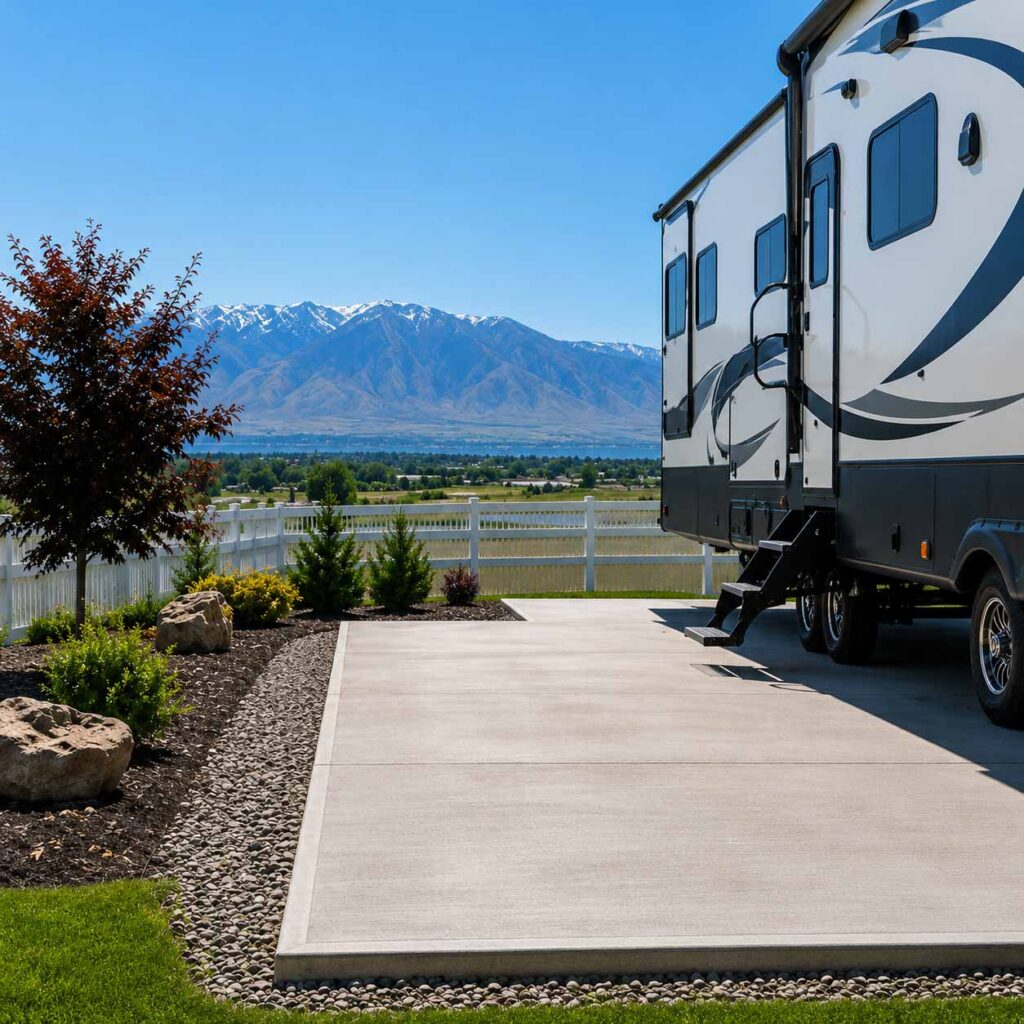
RV ownership is common in Saratoga Springs, and it makes sense. With Utah Lake nearby, the mountains within driving distance, and weekend trips built into the local lifestyle, having a travel trailer, fifth wheel, toy hauler, or motorhome at home is convenient. The problem usually starts when there is no good place to park it.
At first, many homeowners try to make the existing driveway work. The RV gets backed in at an angle, a truck has to park on the street, or the side yard slowly turns into a dirt track. Over time, the weight of the vehicle, the moisture under the tires, and the constant traffic can create real issues. A dedicated concrete RV pad gives the RV a proper place to sit without taking over the driveway or damaging the landscaping.
For homeowners in Saratoga Springs, Utah, an RV pad is not just about convenience. It is about protecting the vehicle, keeping the property cleaner, and building a stable surface that works through heat, snow, rain, and freeze-thaw cycles.
Why Parking an RV on Grass, Dirt, or Gravel Becomes a Problem
Grass and dirt may look harmless at first, especially during dry weather. But once an RV sits in the same place for weeks or months, the ground starts to show the weight. Tires create ruts, grass dies underneath the vehicle, and soft areas can become muddy after storms or sprinkler use.
Gravel is better than bare dirt, but it still has limitations. Without the right base prep, gravel can shift, settle, spread into the lawn, and develop low spots. Heavy RV tires can push the rock into the soil underneath. Once that happens, the area becomes uneven and harder to maintain.
A concrete RV pad solves those problems by creating a firm, clean, level surface. It keeps the RV off soft ground, helps reduce mud and tracking, and gives the vehicle a more stable parking area year-round.
Concrete RV Pads Help Protect the RV Itself
An RV is a major investment. Leaving it on an uneven or moisture-prone surface can create problems that are easy to overlook. When tires sit on damp soil or wet grass, moisture can stay trapped around the contact area. When the surface is uneven, the RV may not sit level, which can affect storage, drainage, doors, slide-outs, and general use.
A concrete pad helps create a cleaner environment around the vehicle. It also makes it easier to inspect the tires, clean around the RV, load gear, and access storage compartments. For homeowners who use their RV frequently, that everyday usability matters.
Why RV Pads Need to Be Built Stronger Than a Patio
An RV pad may look like simple flatwork, but it should not be treated the same as a light patio or walkway. RVs are heavy, and that weight is concentrated where the tires sit. A loaded travel trailer, fifth wheel, or motorhome can place serious stress on the concrete surface and the base below it.
A properly installed RV pad should account for the vehicle size, weight, access path, soil conditions, drainage, and how the pad will be used. That usually includes a compacted base, the right concrete thickness, and reinforcement such as rebar or wire mesh when appropriate.
For many residential RV pads, concrete thickness commonly falls in the 4 to 6 inch range. Heavier motorhomes may need a stronger specification. The point is not to guess. The pad should be designed around the actual use, not poured like a generic backyard slab.
Drainage Matters in Saratoga Springs
Saratoga Springs properties can vary widely. Some homes have side yards with slope, newer subdivision lots with tight access, or areas where water naturally collects after irrigation or storms. Drainage should be planned before the concrete is poured.
A good RV pad should move water away from the home, away from the garage, and away from areas where puddling could create ice in winter. That may involve the right slope, strategic placement, or coordination with existing drainage features. Poor drainage can shorten the life of the pad and make the area less safe during freezing weather.
Common RV Pad Layout Options
Every property is different, so the best layout depends on access, setback requirements, fence placement, driveway location, and how the RV is used. Some homeowners want a straight side-yard pad that extends from the driveway. Others need an angled pad to make backing in easier. Some want extra width for steps, storage bins, or a walkway around the RV.
Before installation, it helps to think through how the RV will actually move in and out of the space. A pad that is technically large enough may still be frustrating if the approach angle is too tight or if the owner cannot safely open compartments and doors.
Should You Add Hookups or Conduit?
Some homeowners only need a parking surface. Others want to plan ahead for electrical conduit, water access, or drainage. If any utilities may be needed later, it is better to discuss them before the pour. Adding sleeves, conduit, or planned access during installation is much easier than cutting into finished concrete later.
Even if the hookups are not installed immediately, planning ahead can save time and reduce future disruption.
How Long Before You Can Park on a New RV Pad?
Concrete needs time to cure. The exact timeline depends on weather, mix, pad design, and project conditions, but homeowners should avoid placing a heavy RV on fresh concrete too soon. Light use may be possible earlier, but full load-bearing strength takes longer.
This is one of the most important parts of the process to respect. A good installation can still be damaged if a heavy vehicle is parked on it before the concrete has had enough time to cure.
What Finish Works Best for an RV Pad?
For most RV pads, a broom finish is a practical choice. It provides traction, handles outdoor exposure well, and is easier to maintain than slick concrete. Some homeowners may prefer exposed aggregate or a more decorative finish if the pad is highly visible from the street, but performance should come first.
The finish should work for real use: walking around the RV, loading gear, dealing with winter moisture, and keeping the surface clean.
Why Local Installation Experience Matters
RV pad installation in Saratoga Springs is not just about pouring a rectangle of concrete. Local soil, slope, drainage, winter conditions, and subdivision layouts all affect the outcome. A local concrete contractor can evaluate the site and recommend a layout and build spec that fits the property.
Xpert Concrete & Seal installs concrete RV pads for homeowners who need a stable, long-lasting place to park their RV, trailer, or motorhome. The process starts with looking at the site, understanding the vehicle, and building the pad correctly from the base up.
Ready to Add a Concrete RV Pad in Saratoga Springs?
If your RV is taking over the driveway or sitting on an area that was never built for the weight, it may be time to install a dedicated concrete pad. A well-built RV pad can make your property cleaner, easier to use, and better prepared for long-term RV parking.
Contact Xpert Concrete & Seal for RV pad installation in Saratoga Springs, Utah, and get a clear estimate for your project.
Frequently Asked Questions About RV Pad Installation in Saratoga Springs
How thick should a concrete RV pad be?
Many RV pads are built between 4 and 6 inches thick, but heavier motorhomes may need a stronger spec with added reinforcement. The right thickness depends on the vehicle, site conditions, and intended use.
Can I pour an RV pad next to my driveway?
In many cases, yes. The layout needs to consider access, slope, drainage, property lines, and local requirements. A site visit helps determine the best location.
Is concrete better than gravel for RV parking?
Concrete provides a more stable, level, and low-maintenance surface. Gravel can work temporarily, but it can shift, rut, and settle under heavy vehicle weight.
How long does RV pad installation take?
Many residential RV pad projects can be formed and poured quickly once the site is prepared, but curing time is still required before parking a heavy RV on the surface.