
Should I Repair My Cracked Concrete or Tear It Out and Replace It? A Highland, Utah Homeowner’s Guide
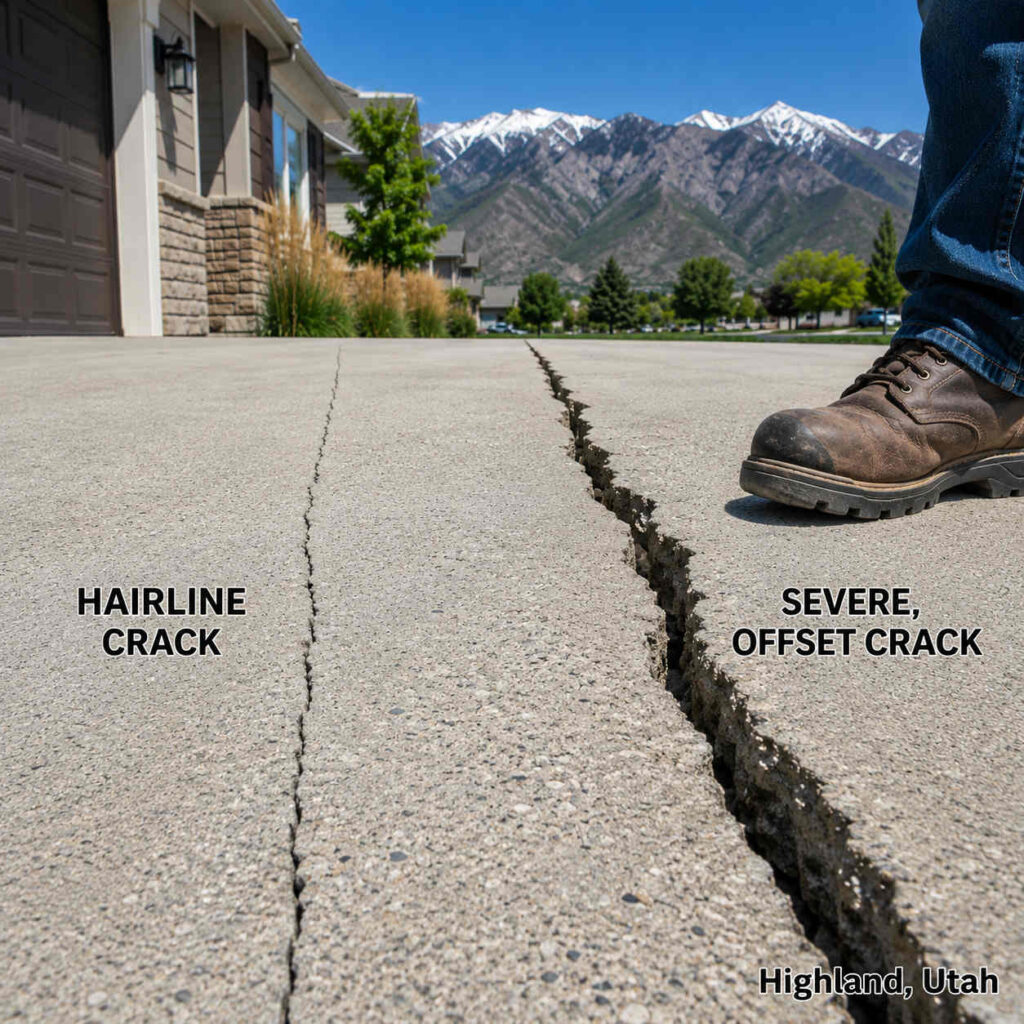
If the crack in your Highland, Utah driveway or patio is narrower than 1/4 inch, isn’t shifting, and both sides of the slab are still level with each other, a professional repair and seal job can add another 10 to 15 years of life for a fraction of what a full replacement costs. But if the crack is wider than 1/2 inch, one side of the slab has lifted or dropped below the other, several cracks meet and spread across a single panel, or the concrete rocks when you step on it, you’re looking at a base or structural failure — repair won’t hold, and tear-out and replacement is the right call.
Here’s why that distinction matters more in Highland than in a lot of other Utah County cities: most homes here were built in the early-to-mid 2000s, which means the average driveway, walkway, or patio slab is now 15 to 25 years old — right in the window where freeze-thaw cycling and soil movement start separating cosmetic cracks from structural ones. Highland also sits higher on the bench, tight against the base of Lone Peak and the Wasatch Range, which means harder freeze-thaw swings than valley-floor cities like Lehi or Draper, plus the expansive clay-heavy soils common to the east-bench communities of Utah County. Both factors accelerate concrete failure if the base underneath was ever compromised.
The 5-Minute Driveway Test: Repair or Replace?
Before you call anyone, walk your driveway, patio, or walkway and check for these five things. They’re the same checks our crews run on every Highland estimate:
- Crack width — Slide a quarter into the crack. If it disappears, it’s a hairline crack. If you can see daylight around the edge of the coin, it’s wide enough to let water into the base.
- Vertical offset — Run your foot across the crack. Any lip or step where one side sits higher than the other means the base has settled unevenly — a repair will crack again at the same spot.
- Sound test — Tap the slab near the crack with a hammer or the heel of your boot. A hollow or drummy sound means there’s a void underneath, not solid base.
- Crack pattern — A single straight crack running with a control joint is usually cosmetic. Multiple cracks branching off each other in a spiderweb or map pattern signal the slab itself is breaking down.
- Age and history — A 6-year-old patio with one clean crack is a different situation than a 22-year-old driveway with five cracks that keeps reappearing after past patch jobs.
If you checked mostly the first column, you’re a good candidate for repair. If you checked several from the second, replacement is the more honest recommendation — and any Highland contractor telling you otherwise on a driveway with multiple structural signs is selling you a short-term patch.
Why Highland’s Soil and Elevation Change the Math
Highland sits at roughly 4,876 feet — noticeably higher than Salt Lake City or Lehi — which means colder overnight lows and more freeze-thaw cycles each winter. Water that gets into a crack, freezes, and expands overnight is doing more damage per season here than it would in a lower-elevation neighborhood. That’s the mechanism behind most “surprise” cracking in Highland driveways: a hairline crack from October widens every hard freeze through March, and by spring it’s a different problem than it was in the fall.
The other local factor is soil. Much of Highland — particularly homes on the benches near Alpine and Cedar Hills — sits on clay-heavy soil that expands when wet and contracts when dry. If a driveway or patio wasn’t poured over a properly compacted gravel base (common in some of the older 2000s-era builds before current base-prep standards), that soil movement shows up years later as settling, not just surface cracking. This is exactly why a visual crack can mean two very different things: a control-joint crack in a well-prepped slab is cosmetic, while the same-looking crack over a poorly compacted or expansive-soil base is the first sign of a slab that’s going to keep failing no matter how many times it’s patched.
What Concrete Repair Actually Fixes (and What It Costs in Highland)
When a crack is caught early and the base underneath is still sound, repair is almost always the right call. Depending on what we find, repair can mean:
- Crack routing and sealing — widening the crack slightly and filling it with a flexible polyurethane or epoxy sealant so water can’t get in and refreeze.
- Structural epoxy injection — for hairline cracks where the concrete itself needs to be bonded back together, not just sealed on the surface.
- Mudjacking / slab lifting — pumping a cement-based slurry underneath a slightly sunken section to re-level it without removing the concrete.
- Resurfacing or overlay — a thin bonded topping over surface spalling or scaling, restoring a clean look without a full tear-out.
- Sealing — a penetrating or film-forming sealer applied after repair to slow future water intrusion, which matters more in Highland’s freeze-thaw climate than in milder parts of the state.
For a typical Highland homeowner, isolated crack repair and sealing on a driveway or patio runs a few hundred dollars up to roughly $1,500 depending on length and how many cracks need attention. Mudjacking a sunken section of walkway or patio generally costs less than half of what tearing out and repouring the same area would run. The math only works, though, if the base underneath is still structurally sound — mudjacking a slab over a genuinely failed base is a repair that won’t last.
When Tear-Out and Replacement Is the Smarter Investment
Replacement stops being the “more expensive option” and starts being the financially smarter one once repair costs start approaching half of what a new pour would cost, or once the underlying problem is structural rather than cosmetic. Signs that point to replacement instead of another round of patching:
- Multiple cracks connected across a single slab, or cracking that has spread since a previous repair
- A section that sounds hollow under a hammer tap, indicating a void or washed-out base
- Spalling or surface flaking across more than roughly a third of the slab
- A driveway or patio original to a 20+ year old Highland home showing widespread, not isolated, damage
- Drainage problems — water pooling toward the house or garage instead of away from it, which no amount of crack sealing will fix
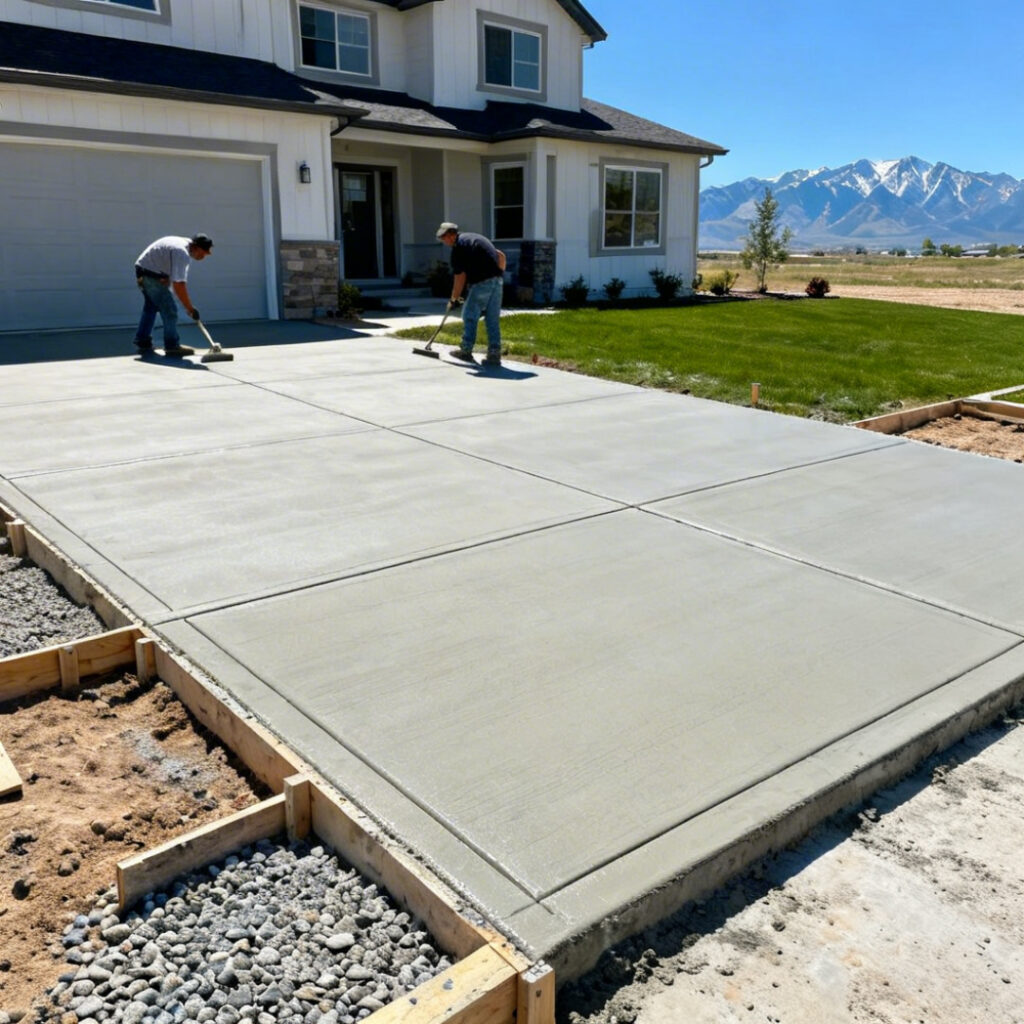
A full driveway or patio replacement in the Highland market typically involves demolition and haul-off of the old slab, re-compaction of the base (critical, given the area’s soil), proper reinforcement, and a new pour with correctly placed control joints. Because it resets the base as well as the surface, a properly installed new slab is built to outlast a patched one by a decade or more — the trade-off is a higher upfront cost against a much longer runway before you’re dealing with this decision again.
Repair vs. Replace at a Glance
Use this side-by-side to see which column matches your situation:
| Factor | Repair Usually Makes Sense | Replacement Usually Makes Sense |
| Crack width | Under 1/4 inch | Over 1/2 inch |
| Slab level | Even on both sides of the crack | One side visibly higher or lower |
| Crack pattern | Single, isolated crack | Multiple, connected / spiderweb pattern |
| Sound underfoot | Solid, no hollow spots | Hollow or drummy sound |
| Age | Under ~15 years old | 20+ years with widespread damage |
| Typical cost | ~$200–$1,500 per job | ~$3,500–$10,000+ per driveway |
| Added lifespan | 8–15 more years | 25–30 years (full reset) |
What Happens If You Wait
Delaying the decision rarely makes it cheaper. Water that gets into a crack this winter and refreezes will widen it before spring — a repair job today can turn into a replacement job by next year if it’s left alone through a Highland winter. On Highland’s clay-heavy lots, water finding its way under a cracked slab also accelerates the soil movement that caused the problem in the first place, so the damage compounds rather than staying static. There’s also a practical, local reason to act sooner rather than later: Highland’s median home value and buyer expectations are high, and a cracked or visibly patched driveway is one of the first things a buyer or appraiser notices walking up to the house.
The Bottom Line for Highland Homeowners
Most cracked concrete doesn’t need to be torn out — but some of it does, and the only way to know for sure is a hands-on evaluation of the crack width, the base underneath, and how the damage has progressed. A trustworthy Highland concrete contractor will tell you honestly when a $400 repair will hold for another decade, and just as honestly when that same $400 would be money spent delaying a replacement you’re going to need anyway.
Get an Honest Repair-or-Replace Evaluation
If you’re staring at a crack in your Highland driveway, patio, or walkway and can’t tell which side of this guide it falls on, Xpert Concrete & Seal will come take a look and tell you straight — no upselling a replacement you don’t need, and no patching over a problem that’s going to come back.
Call Xpert Concrete & Seal today at (385) 560-9123 or request a free quote online, and we’ll give Highland homeowners a clear, honest recommendation backed by 40+ years of combined concrete experience serving Utah County.
Frequently Asked Questions
How much does concrete crack repair cost in Highland, UT?
Isolated crack repair and sealing on a driveway, patio, or walkway typically runs from a few hundred dollars up to around $1,500, depending on the number and length of cracks and whether mudjacking is needed to re-level a sunken section. Getting an on-site quote is the only way to get an exact number for your slab.
How do I know if a crack is just cosmetic?
A cosmetic crack is usually narrow (under 1/4 inch), runs along or near an existing control joint, and shows no vertical offset between the two sides. If the crack is wider, has a step where one side sits higher than the other, or sounds hollow when tapped, it’s more likely tied to base movement rather than normal surface shrinkage.
Can mudjacking fix a sunken driveway instead of replacing it?
Often, yes. Mudjacking pumps a cement-based slurry beneath a sunken section to raise it back to level, and it costs significantly less than tearing out and repouring. It only works, though, if the concrete itself is still structurally sound — mudjacking won’t fix concrete that’s already cracked into multiple pieces or badly deteriorated.
Will a repaired crack just come back?
A properly repaired crack — routed, filled with a flexible sealant, and sealed — shouldn’t reopen at the same spot under normal conditions. Cracks that keep coming back after repair are usually a sign the underlying base issue was never addressed, which is when replacement becomes the more reliable fix.
How long does a concrete driveway replacement take in Highland?
A standard residential driveway replacement typically takes 1 to 3 days: demolition and haul-off, base prep and compaction, form setting, the pour itself, and finishing. Weather and curing time can add a day or two, and you’ll want to stay off the new concrete for the first 24–48 hours and avoid driving on it for about a week.
Does Highland’s weather really affect how long my concrete lasts?
Yes. Highland’s higher elevation means more freeze-thaw cycles each winter than valley-floor cities nearby, and water that gets into an unsealed crack expands every time it freezes, widening the damage season over season. Sealing cracks before winter and re-sealing the whole slab every few years measurably slows this process.
Should I repair now or wait until spring?
Repair before winter whenever possible. Sealing a crack before the first hard freeze keeps water out during the months when freeze-thaw damage does the most harm. Waiting until spring often means dealing with a wider, worse crack than the one you have right now.